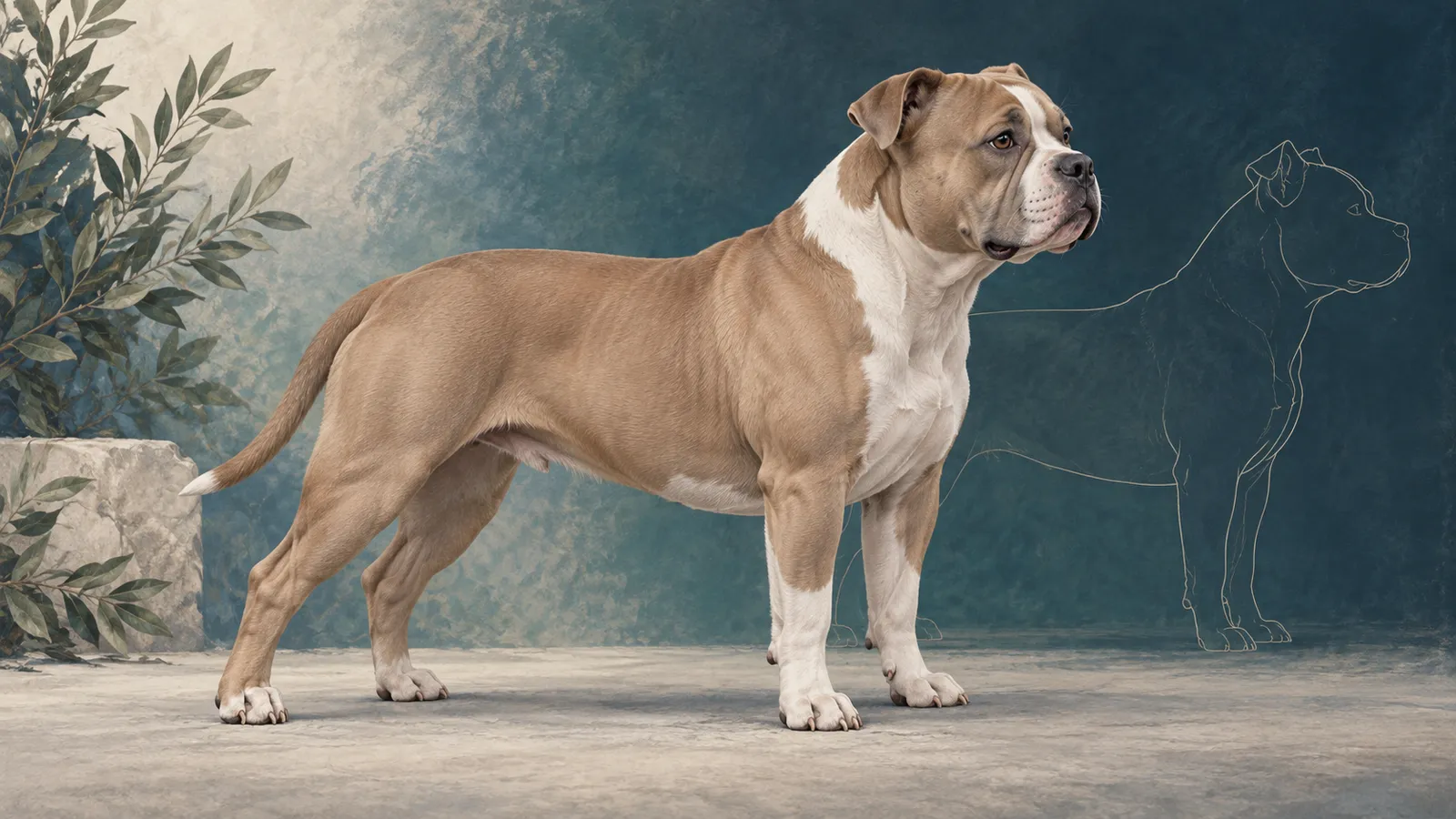
Understanding Structure in the Pocket American Bully
Why height is only the beginning when evaluating the dog.
The Pocket American Bully can make a striking first impression. A compact frame, substantial muscle, and a broad head give the variety its recognizable presence. Evaluating structure, however, requires looking beyond the feature that first catches your eye.
Under the ABKC standard, Pocket classification is determined by adult height at the withers, the highest point of the shoulders:
| Sex | ABKC Pocket height |
|---|---|
| Male | At least 14 inches and under 17 inches |
| Female | At least 13 inches and under 16 inches |
The Pocket follows the American Bully’s underlying breed type in a shorter dog. Height classification does not replace the rest of the standard. ABKC American Bully standard
Look at the dog as a whole
A broad front should work with the rear, and the head should fit the body. The ABKC standard calls for sturdy forelegs, supportive pasterns, compact feet, and balanced muscular development. It also identifies excessive chest width that interferes with movement as a fault.
The head is important to breed type, but muzzle length must allow normal breathing. The standard’s description of substance is not an instruction to maximize every feature. ABKC structural requirements
For an owner studying a dog, this suggests a useful habit: move your attention deliberately from the head to the feet, body, and hindquarters. Do not let one impressive feature determine your entire assessment.
Watch movement as well as the pose
A posed photograph captures one carefully arranged moment. Video of a dog moving naturally provides additional information.
UKC’s American Bully standard describes coordinated movement with reach in front and drive behind, and identifies crossing, interference, and other gait faults. It explicitly warns against exaggerated features that compromise physical activity. These are UKC requirements; exhibitors should always use the standard of the registry hosting their show. UKC American Bully standard
When collecting material for a dog’s profile, include clear views from the front, side, and rear, plus unedited movement footage. Record the dog’s age and measured height so viewers have context.
Use pedigrees to investigate patterns
An accomplished ancestor can make a pedigree interesting, but it does not establish the quality of every descendant. Study the individual dog, then use the pedigree to investigate relatives and documented outcomes.
A useful profile combines ancestry with measurements, photographs, results, and health records. Together, those details offer a fuller picture of the Pocket American Bully standing in front of you.