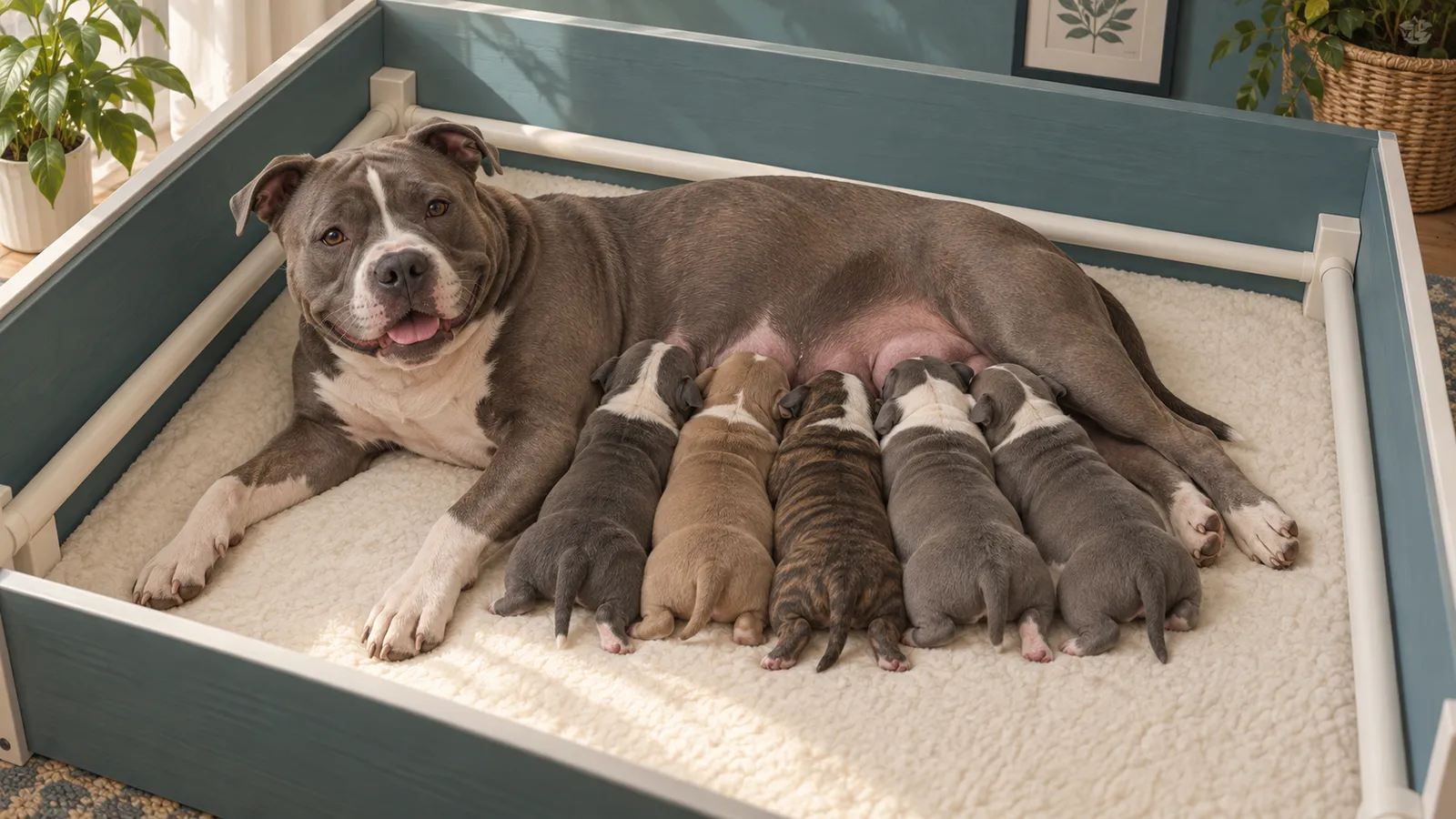
Preparing a Whelping Space for a Large Litter
Planning the box, warmth, bedding, and records before the puppies arrive.
Preparing for a litter begins before labour. A well-planned whelping area makes it easier to observe the mother, keep puppies clean and comfortable, and notice when an individual needs help.
For an American Bully litter, choose equipment around the actual dam’s size and needs. A product described as suitable for “large breeds” may still be a poor fit for a particular dog.
Give the mother room and the puppies protection
The box should allow the dam to lie fully on her side, turn comfortably, and nurse without crowding. Its entrance should be manageable for her while containing the puppies.
Protective rails, often called pig rails, create space along the walls that can reduce the risk of puppies becoming trapped beneath the dam. They need to suit the box and the dog; rails do not replace supervision.
Choose bedding that provides traction, absorbs moisture, and can be changed easily. Avoid loose arrangements that allow puppies to disappear beneath folds. Prepare clean replacements before delivery begins. AKC: whelping equipment and bedding
Measure warmth at puppy level
Newborn puppies need a carefully managed environment. VCA gives 85–90°F, approximately 29.5–32°C, as a general environmental range for the first four days, while noting that litter size and the puppies’ condition affect heating needs.
This is not a requirement to heat the entire room to that temperature. Agree on the setup with your veterinarian and measure conditions where the puppies actually lie. A large litter produces additional shared warmth. VCA: caring for newborn puppies
Heat equipment can burn or overheat newborns. Do not assume that a weak puppy can move away from an unsafe heat source. Merck specifically warns about heating-pad burns in neonates unable to escape excessive heat. Merck Veterinary Manual: neonatal care
Make every puppy visible in the records
In a large litter, an overall impression can hide one puppy’s difficulty. Give each puppy a consistent identification method agreed with your veterinarian, and keep an individual record of birth weight, subsequent weights, nursing observations, and concerns.
Weigh puppies at least daily using a suitable accurate scale. Failure to gain weight or weight loss warrants prompt veterinary assessment. VCA: monitoring puppy growth
Arrange a veterinary examination of the mother and litter after birth. Merck recommends a complete neonatal examination within the first 24 hours following natural delivery. Seek urgent advice for a puppy that is cold, weak, unable to nurse, struggling to breathe, or persistently distressed. Do not force-feed a chilled puppy; hypothermia affects digestion and increases feeding risks. Merck Veterinary Manual: first-day care
Keep the regular veterinarian’s number, an emergency contact, and transport arrangements ready. The box is only one part of preparation; observation and timely help matter throughout the first 72 hours.