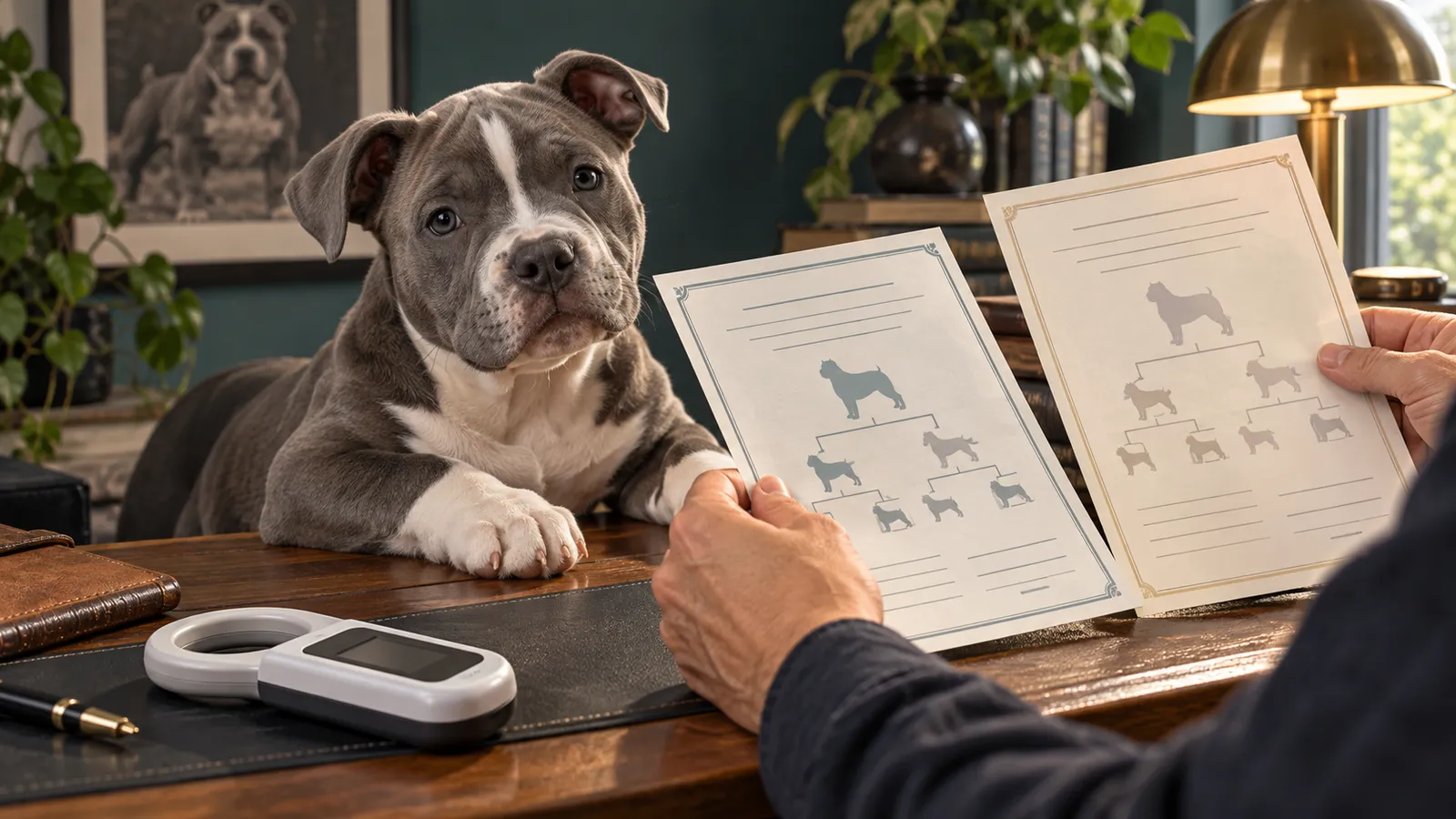
Checking Registration Papers Before You Buy
A practical approach to connecting the paperwork, the seller, and the puppy.
Registration papers deserve the same careful attention as any other part of choosing a puppy. A recognizable logo or impressive pedigree can be reassuring, but the important question is whether the documents accurately belong to the dog being offered.
Start by asking exactly what paperwork is included. An individual registration certificate, a puppy application, a litter record, and a pedigree printout serve different purposes. Establish which documents already exist and which still require an application or transfer.
Compare the identifying details
Read the documents together rather than examining each one in isolation. Compare the registered names, numbers, date of birth, sex, recorded parents, and any permanent identification included.
Ask the seller to explain discrepancies before proceeding. A spelling difference may have an ordinary explanation, but it should be resolved through supporting records rather than an assumption.
If a microchip number appears in the documentation, arrange for a veterinary professional to scan the dog and compare it. That connects a physical identifier to the paperwork; it does not by itself verify the stated pedigree.
Check the registry’s own process
Use contact details obtained independently from the registry’s official website. Ask what information the registry can confirm, what transfer documents are required, and how an apparent error should be corrected.
ABKC’s registration guidance stresses complete, accurate paperwork and required signatures. Its services include permanent registration and ownership transfer, duplicate certificates, and breeding-rights revisions. The applicable process depends on the document and the dog’s registration status. ABKC registration guidance
Avoid assuming that being registered with one organization guarantees eligibility with another.
Understand what “DNA verified” means
Ask to see the actual report and identify the test performed. A DNA identity profile, parentage verification, breed estimate, and health screen are different products.
UKC’s DNA application distinguishes an individual DNA profile from verified identified parentage. Its parentage designation requires the sire and dam to be profiled, compared, and verified. A DNA profile alone therefore does not mean that the claimed parents have been confirmed. UKC DNA services
Keep a complete record
Before finalizing the purchase, put the paperwork commitments in writing: what is supplied, who completes the transfer, any agreed restrictions, and how outstanding documents will be handled.
Retain the contract, registry correspondence, certificates, and relevant test reports. A community pedigree profile is a useful research aid, but it should lead back to supporting records.
Good documentation makes the dog’s identity easier to follow throughout its life, and gives its future pedigree a stronger foundation.